

Last editorial review: September 16, 2026. Immigration rules, income thresholds and application procedures can change. Official immigration and consular sources should always be checked before applying.
Working from anywhere is no longer just a lifestyle experiment. Remote employees, freelancers, founders and other location-independent professionals are increasingly looking for legal ways to spend months abroad without pretending that a long stay is simply a holiday.
That is where the digital nomad visa comes in.
The important part, however, is not the label. There is no single worldwide definition of a digital nomad visa. One country may issue a visa, another may issue a temporary residence permit, and another may place remote workers inside a broader immigration category.
That means two programs marketed as “digital nomad visas” can have very different rules for income, local clients, family members, taxes, renewal and long-term residence.
What Is a Digital Nomad Visa?
A digital nomad visa is commonly used as an umbrella term for immigration permission designed for people who earn income remotely and want to live temporarily in another country.
Typical applicants can include:
- Remote employees
- Freelancers and independent contractors
- Online business owners
- Consultants
- Software and technology professionals
- Designers and creative professionals
- Content and marketing professionals
- Other location-independent workers
The legal structure matters. Spain, for example, has an international teleworking route for qualifying remote professionals. Portugal has a residence pathway for professional activity performed remotely for entities outside Portuguese territory. South Korea operates an F-1-D Workation Visa. Thailand uses the Destination Thailand Visa, or DTV, for several categories including eligible remote workers and freelancers.
Compare the actual immigration status, permitted professional activity, length of stay, renewal rules, family options and restrictions.
Who Can Apply?
Requirements vary by country, but most programs are built around one basic principle: the applicant must be able to support themselves while carrying out qualifying remote professional activity.
Depending on the destination, eligible applicants may include people who:
- Work remotely for an employer outside the destination country.
- Operate a business established outside the destination.
- Work independently for overseas clients.
- Can document an established professional relationship or business activity.
- Meet the relevant income or financial-resource threshold.
Some programs also require a minimum period of professional experience, employment history, qualifications or proof that an overseas company has been operating for a specified period.
Being able to perform your job from a laptop does not by itself mean that every digital nomad program will accept your employment structure.
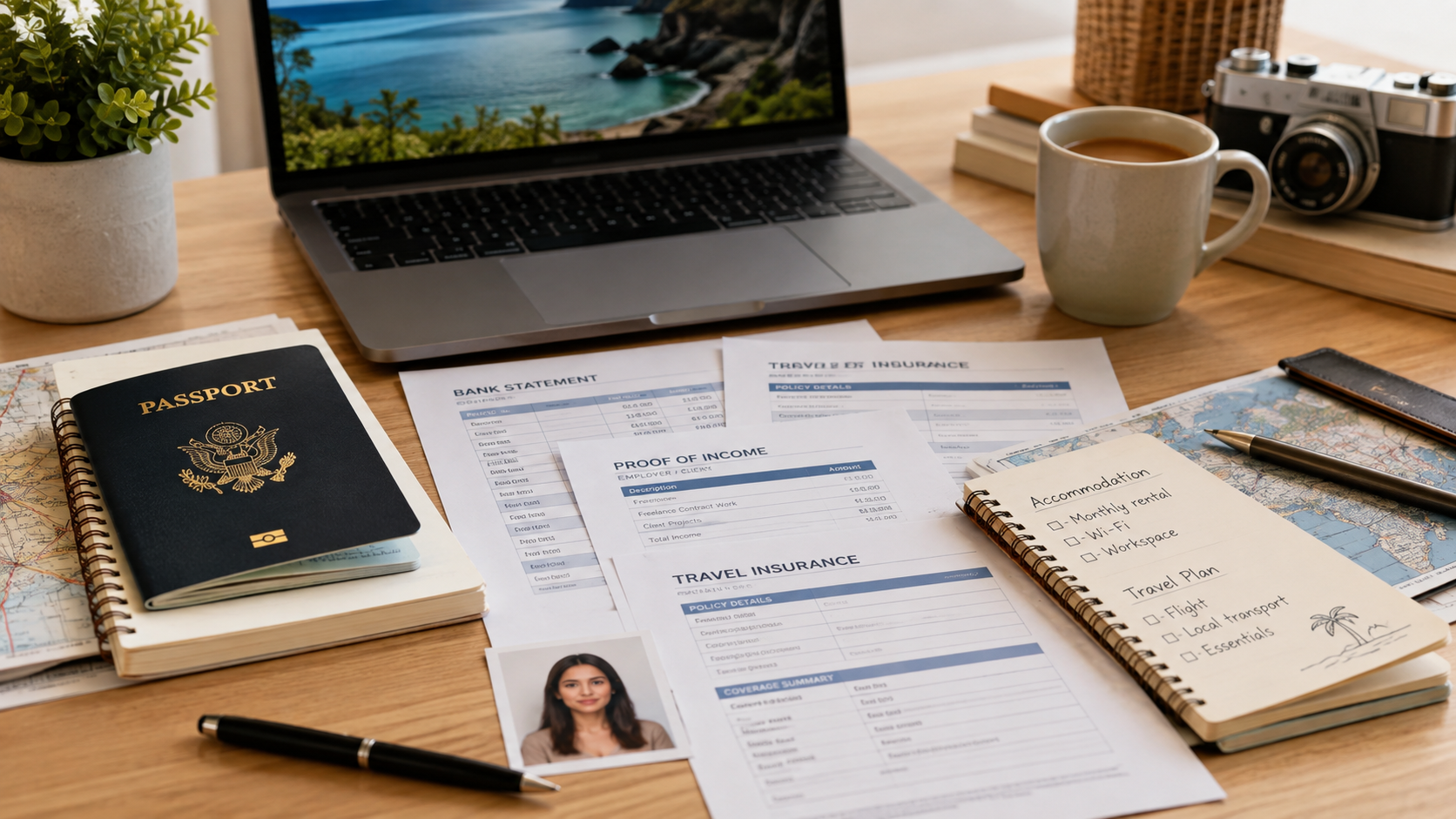
Build the document file before starting the application. Missing employment, income or legalization documents can create avoidable delays.
Common Digital Nomad Visa Requirements
1. Proof of Remote Work
You will usually need evidence showing what you do, who you work for and why the work can be performed remotely.
Documents may include:
- Employment contracts
- Employer confirmation letters
- Freelance or consulting agreements
- Client contracts
- Business-registration records
- Invoices or proof of professional activity
- Professional qualifications or experience records
2. Minimum Income or Financial Resources
Many countries require proof that you can support yourself without depending on prohibited local employment.
The test may be based on:
- Monthly or annual income
- Salary benchmarks
- National minimum-wage formulas
- Gross national income benchmarks
- Bank balances or savings
- A combination of income and financial reserves
Do not rely on an old blog post for the final number. Financial thresholds are among the visa details most likely to change.
3. Health Insurance
Some programs require medical or health insurance valid for the destination and for a specified period. The required coverage, exclusions and insurer conditions can vary.
4. Criminal Record Documents
Longer-stay programs may require a police or criminal-record certificate.
The document may also require:
- Apostille
- Legalization
- Certified translation
- A specific issue date or validity period
5. Valid Travel Document
Your passport usually needs sufficient validity for the application and intended stay. Some programs also impose rules concerning when the passport was issued.
6. Accommodation or Address Information
Depending on the program, applicants may need accommodation evidence during the visa stage or after arrival when completing residence registration.
7. Application and Residence Fees
Government fees may vary by nationality, consulate, application location and whether the process involves both a visa and a later residence permit.
How to Apply for a Digital Nomad Visa
Step 1: Check the Legal Route
Start with the official immigration authority or the embassy or consulate responsible for your place of residence.
Confirm that you are looking at the correct immigration category before collecting documents.
Step 2: Check Your Work Structure
Determine whether the program accepts your situation:
- Foreign employee
- Freelancer
- Company owner
- Contractor
- Mixed foreign and local clients
Step 3: Build a Document Checklist
You may need:
- Passport
- Application form
- Passport photographs
- Employment or business records
- Client contracts
- Bank statements
- Proof of income
- Health insurance
- Criminal-record certificate
- Accommodation information
- Marriage or birth certificates for accompanying family
Step 4: Check Apostille and Translation Rules
Do this early. Background checks, apostilles, legalizations and certified translations can take longer than the online portion of the visa application.
Step 5: Apply Through the Correct Channel
Depending on the country, applications may be submitted through:
- An embassy or consulate
- An immigration authority
- An online visa portal
- An authorized visa center
- A combination of overseas and post-arrival procedures
Step 6: Wait Before Making Irreversible Plans
Processing times can vary widely. Avoid assuming that a typical processing estimate guarantees approval by a particular date.
Step 7: Complete Post-Arrival Requirements
Visa approval may only be the first stage.
After arrival you may still need to complete:
- Address registration
- Residence-card procedures
- Immigration appointments
- Local identification registration
- Insurance or healthcare registration
- Confirm the official application website.
- Confirm where you are allowed to apply.
- Check the newest income threshold.
- Check whether local client work is permitted.
- Check whether your family can accompany you.
- Check document legalization requirements.
- Check post-arrival registration obligations.
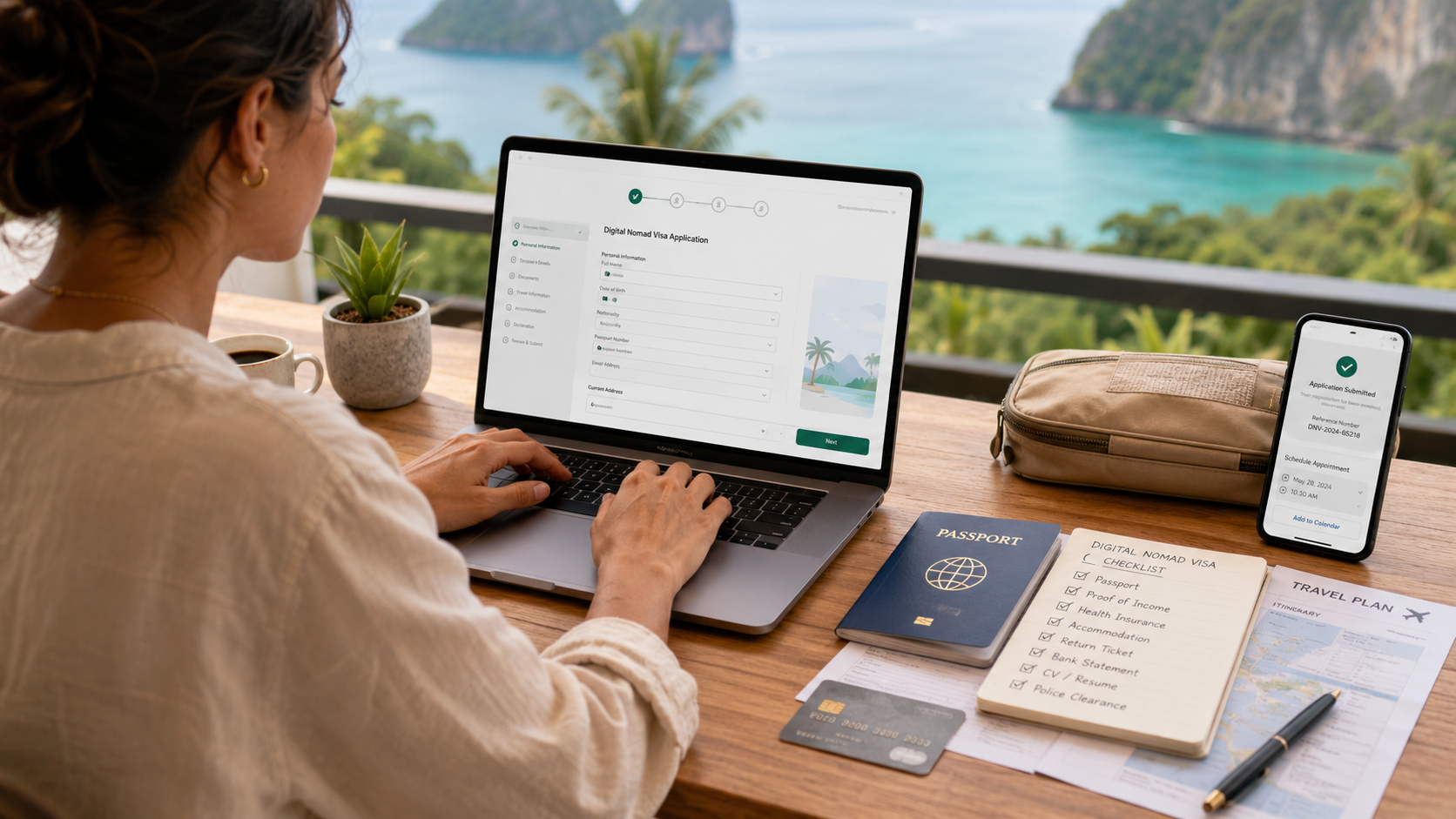
How Much Does a Digital Nomad Visa Cost?
There is no standard global price.
The official application fee is only one part of the real cost.
| Cost | What it may include | What to check |
|---|---|---|
| Government fees | Visa, residence or immigration processing fees | Whether fees vary by nationality or application location |
| Documents | Background checks, certificates and records | Expiry dates and required formats |
| Legalization | Apostilles, consular legalization and translations | Which documents actually require them |
| Insurance | Required health or medical coverage | Coverage limits and insurer restrictions |
| Arrival costs | Temporary accommodation and local appointments | Post-arrival registration requirements |
| Professional advice | Optional immigration, legal or tax advice | Whether your situation is complex enough to justify it |
For planning purposes, compare the total first-year cost, not just the advertised visa fee.
Digital Nomad Visa vs. Tourist Stay
This is an important distinction.
A tourist visa, visa exemption or other short-stay permission is primarily designed for tourism and other permitted short visits.
A digital nomad visa or remote-work residence status is designed to provide a specific immigration framework for qualifying people who want to live in the destination while continuing eligible remote professional activity.
| Tourist / short stay | Digital nomad / remote-work status | |
|---|---|---|
| Main purpose | Tourism and permitted short visits | Longer stay combined with qualifying remote work |
| Stay length | Usually shorter | Often several months or longer |
| Remote-work framework | May be unclear, limited or governed by separate rules | Usually addressed more directly by the immigration category |
| Documents | Often lighter | Income, work, insurance and background evidence may be required |
| Tax result | Not determined by the visa label alone | |
Do not assume that having foreign clients automatically makes remote work lawful under every tourist status. Immigration rules differ by country.
Do Digital Nomads Have to Pay Taxes?
Possibly.
One of the most important concepts for long-stay remote workers is that immigration status and tax residence are separate issues.
Tax treatment can depend on factors including:
- How many days you spend in the country
- Your permanent or habitual home
- Your personal and economic ties
- Where your employer is located
- Where your company is managed
- Where work is physically performed
- The source and type of income
- Domestic tax law
- Applicable tax treaties
Day-count tests are important in many jurisdictions, but they are not the only test everywhere. Domestic law and tax treaties can produce different results.
If you expect to stay for several months, maintain tax ties in more than one country, run a company, hold substantial investments or receive income from multiple jurisdictions, consider advice from a qualified cross-border tax professional.
How to Choose the Right Digital Nomad Visa
The easiest visa to obtain is not automatically the best place to live.
Length of Stay
Ask how long the first permission lasts, whether it can be renewed and whether there is a hard maximum stay.
Income Requirement
Meeting the minimum requirement on paper is different from comfortably affording the destination.
Real Cost of Living
Estimate:
- Rent and deposits
- Utilities
- Food
- Transportation
- Insurance
- Coworking
- Mobile data
- Flights home
- Visa-renewal costs
Internet and Remote-Work Infrastructure
Fast headline internet speeds are not enough. Think about backup mobile data, power reliability, coworking options and whether your accommodation is realistic for calls and focused work.
Time Zone
A destination can look perfect until you realize that your normal workday begins at 11 p.m.
Compare your destination with the time zones of your employer, clients, team and family before committing to a long stay.
Taxes
Consider tax exposure before deciding the length of your stay, not after you have already crossed an important residence threshold.
Healthcare
Separate the visa’s insurance requirement from your real healthcare needs. The cheapest policy that satisfies an application rule may not be the coverage you actually want for a long stay.
Lifestyle
Ask whether you genuinely want to live there rather than whether the country looks attractive in travel photos.
Consider:
- Climate
- Safety
- Healthcare access
- Public transportation
- Language
- Community
- Housing quality
- Access to nature or city life
- Distance from home
Examples of Digital Nomad Visa Destinations
Country programs can look similar on the surface while producing very different practical outcomes.
Spain
Spain offers an international teleworking route for eligible foreign remote professionals working primarily for organizations outside Spain.
Employees are generally expected to work for companies outside Spain. Self-employed applicants may also perform some professional activity for Spanish companies, provided that the Spanish activity remains within the program’s permitted limit.
Portugal
Portugal maintains a residence pathway for professional activity carried out remotely for individuals or companies outside Portuguese territory.
Applicants should verify the exact visa and residence route matching their employment or self-employment structure rather than assuming that every Portugal remote-work application follows the same procedure.
South Korea
South Korea now operates its F-1-D Digital Nomad (Workation) Visa as a regular immigration program, following an earlier pilot period.
Since June 30, 2026, the program has included revised income criteria that can vary according to factors such as age and intended place of residence. The maximum stay has also been extended to up to three years under the current framework.
This makes older guides describing the program only as a temporary pilot or limiting the maximum stay to two years outdated.
Thailand
Thailand’s Destination Thailand Visa (DTV) includes digital nomads, remote workers, foreign talent and freelancers within its workcation category.
The DTV is structured as a multiple-entry visa valid for five years, with qualifying stays of up to 180 days per entry and the possibility of an extension under the program rules.
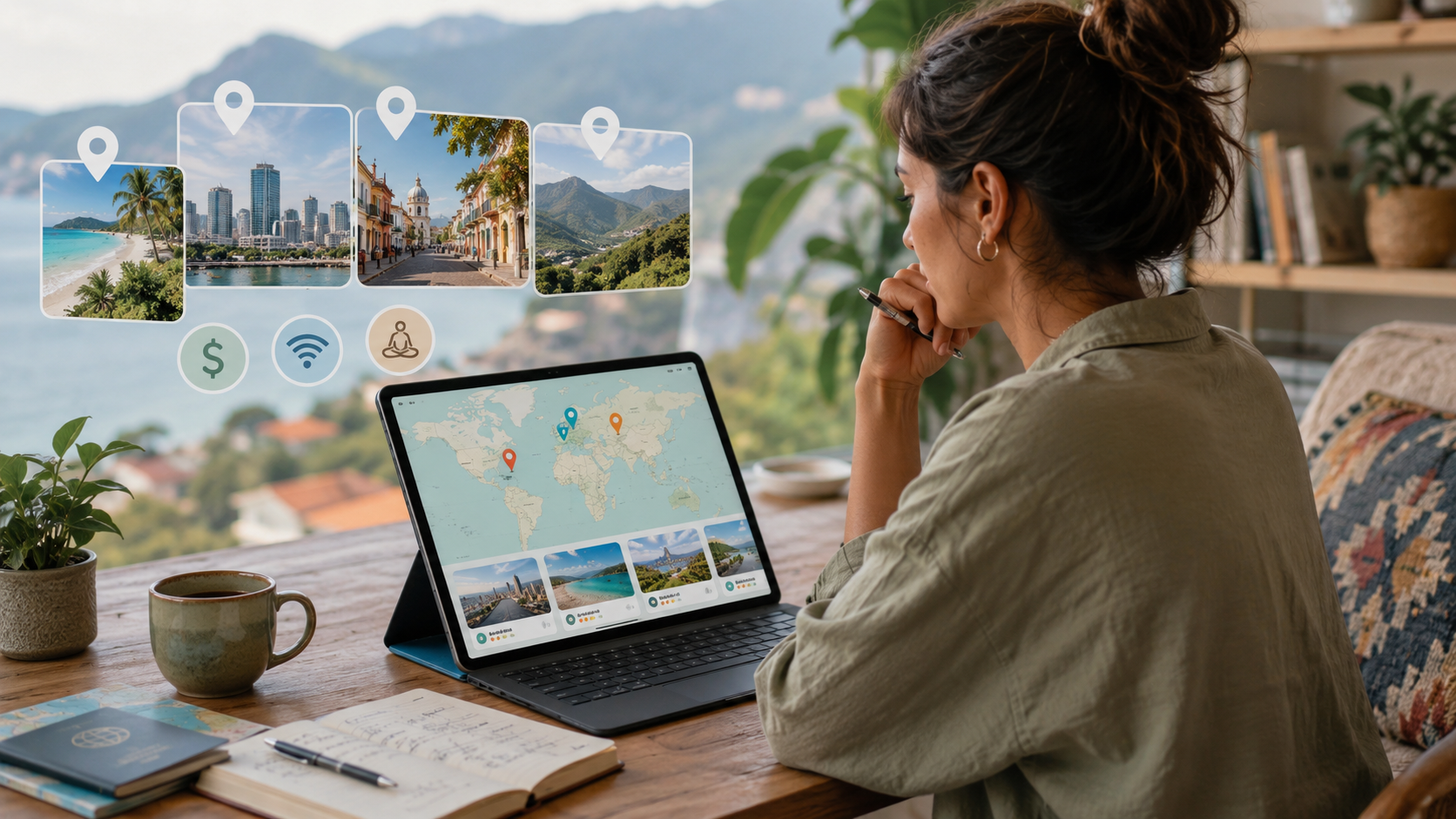
A Better Way to Compare Digital Nomad Visas
| Question | Why it matters |
|---|---|
| Does my exact work structure qualify? | A visa may accept foreign employees but apply different rules to freelancers or company owners. |
| Can I exceed the income threshold comfortably? | Barely qualifying leaves little room for exchange-rate changes or application interpretation. |
| Can I work with local clients? | Local professional activity may be prohibited, limited or treated differently. |
| How long can I really stay? | Initial validity, renewal periods and maximum stay are different concepts. |
| Can my family join? | Dependent rules can materially change the required income and paperwork. |
| What happens for tax? | A legal immigration stay does not guarantee tax exemption. |
| Does the visa support my longer-term plan? | Some permits are temporary only; others may interact differently with residence pathways. |
The best digital nomad visa is rarely the program with the shortest document list.
A strong choice is one where your work structure clearly fits the immigration rules, your income comfortably exceeds the financial threshold, your real cost of living works, and the country still makes sense after considering tax, healthcare, time zones and day-to-day life.
Use broad comparison articles to build a shortlist. Before applying, move to the current country-specific guide and then verify the final requirements with the responsible government authority.
Frequently Asked Questions
Can I work for a local company on a digital nomad visa?
Not necessarily. Many programs are designed primarily for work connected to foreign employers, overseas clients or foreign businesses. Some programs allow limited local professional activity, while others do not.
Can freelancers apply?
Often, yes, but not under every program. Freelancers may need contracts, invoices, client history, business records or evidence of recurring income.
Can my family come with me?
Many programs provide options for spouses, partners or dependent children, but family eligibility and additional financial requirements vary.
Do I need health insurance?
Many programs require some form of health or medical coverage. Check the required coverage amount, geographic scope, insurer conditions and policy period before purchasing insurance.
Does a digital nomad visa make me tax-free?
No. Visa eligibility and tax residence are separate questions. Your tax obligations can depend on your stay length, income, ties and applicable tax treaties.
Is a digital nomad visa permanent residence?
Usually not. Most begin as temporary visa or residence permissions. Whether the period can contribute to permanent residence depends on the country’s immigration law and the exact status granted.
Is a tourist visa enough if I only work on my laptop?
Do not assume so. Rules governing professional activity while physically present in a country vary. Check the destination’s immigration rules for your exact situation.
Which digital nomad visa is easiest?
There is no useful universal answer. The easiest program for a salaried employee may be unsuitable for a freelancer, founder, family or worker whose income is close to the threshold.
Official Resources
Program rules change, so country-specific requirements should be verified with current official sources.
- South Korea — Korea Immigration Service
- Spain — Ministry of Foreign Affairs, European Union and Cooperation
- Portugal — AIMA
- Thailand — Royal Thai Embassy, Destination Thailand Visa


